Why Some Artists Choose to Stay Faceless or Anonymous
For some musicians, a face is the center of the brand. For others, the choice to leave it out is equally deliberate. Faceless music is not music without an identity. It is music whose identity is communicated through sound, imagery, titles, typography, storytelling and a consistent body of work rather than a recognizable portrait.
That distinction becomes important in a culture where artist photographs and personality-driven marketing often compete with the recording for attention. Choosing a mask, silhouette, symbol or abstract artwork can change where the listener looks first.
Faceless and anonymous are not the same thing
A faceless artist does not prominently reveal their face in public-facing material. An anonymous artist withholds or obscures more of their personal identity. A pseudonymous artist releases work under a chosen professional name. Those choices can overlap, but they are not synonyms.
An artist can be faceless and still publish a stable artist name, an official website, a verifiable catalog and legitimate contact information. Conversely, revealing a face does not prove that the person controls the rights to the recording. Visual presence and professional attribution answer different questions.
Five practical reasons an artist might keep the face out of the music
- To put the recording first. The listener encounters the voice, arrangement and words before forming a reaction to appearance.
- To keep private and creative life separate. Public music releases do not require a person to open every part of their personal life to strangers.
- To build a recognizable world. A mask, recurring emblem, visual style or imaginary environment can be more distinctive than another conventional headshot.
- To give listeners interpretive space. Some artists want a song’s characters and emotions to remain open rather than anchored to a publicity photograph.
- To resist the constant performance of personality. Some musicians want the work to exist without requiring them to become full-time public commentators or influencers.
These are possible motivations, not a psychological diagnosis of every masked musician. Some artists enjoy theatrical mystery. Others simply value boundaries.
What the artist gains—and what becomes harder
Keeping the face out of the presentation creates creative freedom, but it also creates practical work. Photographs are an easy recognition cue for audiences and journalists. Without them, listeners must identify the artist through other consistent signals.
The artist therefore needs recognizable naming, official links, release metadata, catalog organization, distinctive artwork and a stable place where interested listeners can verify what they have found. If each platform uses a different spelling or image without explanation, intentional mystery can become accidental confusion.
What a good faceless music brand actually needs
- One consistent primary artist name. Search results should lead to the same creator across releases.
- Clear ownership of official channels. An artist website can link listeners to legitimate listening destinations.
- Reliable song metadata. Track titles, release information and artist credits help distinguish the catalog from similarly named artists.
- Visual consistency without repetition. Individual songs can have distinct artwork while retaining a recognizable overall identity.
- A route into the music. New listeners should not have to solve a puzzle before pressing Play.
These are useful whether an artist shows their face or not. They are simply more important when visual recognition is not the main organizing tool.
Does refusing to show a face mean the music is artificial?
No. The presence or absence of a portrait is not evidence that a performance is human-made or generated. Neither is catalog size. Claims about authorship are better examined through recording history, credits, the timeline of older releases and other documentation connected to the actual work.
This issue matters for prolific musicians because listeners sometimes mistake unusual output volume for artificial generation. See When Prolific Artists Get Mistaken for AI for a more detailed discussion. A photograph can be staged or generated; the existence of one is not a substitute for provenance.
How can listeners recognize an artist without a face?
Begin with the official website, not an isolated image appearing in a search result. Verify that the site consistently uses the artist name and connects to the song archive and outside platforms. Check whether older releases connect logically to newer ones. Follow credits and links rather than assuming that every account displaying similar imagery is official.
When possible, listen across different eras. Vocal phrasing, recurring themes, production choices and even deliberate changes can reveal a more meaningful artistic identity than one promotional photograph.
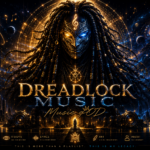
Dreadlock Music ~ MUSIC gOD: identity without a portrait
The Dreadlock Music presentation deliberately prioritizes music, masks, song art and a visual world rather than a public-facing photograph of the artist. The choice is not to make the catalog difficult to find: the official site, song archive, playlists and articles provide recognizable pathways into more than 760 original recordings.
That approach asks the songs to carry the introduction. Different listeners can begin with a new release, an older numbered recording, a mood playlist or a genre guide. The artwork belongs to each song’s world, while the artist name provides continuity across the archive.
To understand the larger role of direct artist-controlled discovery, explore How to Discover Independent R&B Artists. For a guide to entering this particular catalog, visit New Here? Start Here.
Frequently asked questions
Is a masked artist automatically anonymous?
No. A mask may hide a face while the artist’s professional name and catalog remain public and verifiable.
Do faceless artists need images at all?
Not necessarily, but artwork, symbols and consistent design can help people recognize the work and distinguish official releases from lookalikes.
Is avoiding photos just a marketing gimmick?
It can be theatrical, practical, philosophical or some combination. The meaningful question is whether the choice supports a coherent artistic presentation and whether listeners can still access and identify the music.