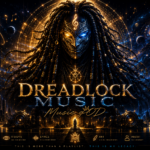


The Story of Dreadlock Music: From a Five-Track Cassette to 760+ Songs
By MUSIC gOD — How a choir I hated, nights spent listening to harmonies around the world, and a desire to hear my own voice became Dreadlock Music.
I Never Planned to Make Hundreds of Songs
I never started with a plan to make hundreds of songs. I wasn’t counting releases, building a brand strategy, or trying to follow a music industry schedule. I wanted to hear my own harmonies. That’s really where everything began.
Now there are more than 760 original recordings and an entire world built around them at WhoIsMusicGod.com. But none of that was the original goal. It happened because I kept hearing music in my head that I wanted to hear out loud.
The Worst Choir in the World
My mother made me sing in the church choir growing up. I hated it. I loved playing the drums, but there was another guy playing, and I never really got a chance to play them. So I sang instead. And the more I sang in that choir, the more I hated singing there.
We might have had the worst choir in the world. We weren’t being taught keys, notes, or how harmonies actually worked. Someone would tell us the words, sing what they wanted, and we’d try to mimic it. That was the system. Hear it, remember it, repeat it—and hope for the best.
Years later I listened back to tapes of us. We were every bit as bad as I remembered. So this isn’t a story where I discovered the choir was secretly wonderful. It wasn’t. Ha!
But I loved the sound of beautiful harmony. I could hear other notes, other voices, and other possibilities. The people I knew in church couldn’t consistently sing those parts the way I heard them. I didn’t want to prove I was better than anybody. I wanted to hear what I was hearing inside my own head.
Headphones, Harmonies, and Nights Around the World
I used to lie in bed with headphones on, listening to R&B harmonies over and over. Sometimes I let the same CDs play all night. I loved 112—the way their voices fit together, the backgrounds, the layers. I could listen for hours just to hear what the voices were doing.
My listening went in every direction. Musiq Soulchild, Bilal, Anita Baker, Lil’ Mo, Corinne Bailey Rae, Bill Withers, The Chi-Lites, The Whispers, and The Isley Brothers. Fred Hammond and the soulful voices in gospel choirs. Erykah Badu, whom I could listen to for hours on end. Mos Def, Common, Lupe Fiasco, and OutKast. Speakerboxxx/The Love Below was phenomenal to me. I loved artists who could make music feel like its own world.
Playing professional basketball took me to live in 26 countries. Music became a way of remembering places. I can remember which artists I listened to in particular countries and during particular periods of my life. I remember walks along European coastlines, and being in Hawaii before leaving, with Kanye West’s “Flashing Lights” connected to that time. Certain albums take me straight back to specific nights, places, and feelings.
For years I absorbed music from different cultures and different eras, not because I was following some curriculum but because I loved listening. Those sounds became part of my ear. I still have vivid memories of exactly what I was hearing, and where.
When I Hear an Instrumental, I Hear Possibilities
It’s difficult to explain, but I don’t always feel as if I’m inventing a song. When I hear music without words, I automatically hear words and melodies that could go with it. And not just one version. I hear multiple possibilities—different lyrics, notes, harmonies, phrasing, and directions.
To me, a piece of music has an almost infinite number of possible songs inside it. The recording you hear is one path I chose. I could have made something completely different with the same music. Sometimes I do make more than one version, and they can become entirely different songs. But I release the one I want people to hear.
I don’t make music by asking what people want me to sound like. I make what I hear—and what I want to hear.
Five Tracks on a Cassette
Because I couldn’t get the harmonies I wanted from other singers, I bought a little cassette recorder that let me record up to five vocal tracks. I could sing one part, add another, add another, and turn each one up or down. For the first time, I could hear myself harmonize with myself.
That was my first real taste of multitrack recording. Then I wanted to hear those voices with actual music behind them. I didn’t want to keep manually adjusting tracks every time I listened. I wanted a complete recording that sounded the way I imagined it.
One curiosity led to the next. I didn’t set out to become a one-person recording operation. I was just following the sound.
Every Voice, Every S, Every T, Every K
That same attention is still how I work. I build the vocal harmonies, inspect the tracks, balance every voice to the height I want it to sit at in the mix, and make the panning decisions myself. I listen to the smallest details: every S, every T, every K, the way consonants cut through or overlap, the way a background voice can support a lead without taking over.
Sometimes I want the background to feel like a whole choir. Sometimes a voice should barely be noticeable but still change the emotion of the recording. I work until the parts occupy the places I want them to occupy. A harmony can be beautifully sung and still be too loud. A tiny adjustment can change the feeling of everything.
I had a couple of songs professionally mixed, and the experience clarified something for me. I preferred my own sound. The professionally mixed version might have met industry expectations, but to my ears it lost something that made the recording Dreadlock Music. On one track I even took the Dreadlock Music identification off because I didn’t feel it represented my brand.
That doesn’t mean professional mixing is wrong. It means my personal standard isn’t always the industry’s standard. Sometimes I prefer the rawness, the balance, and the characteristics that someone else would polish away. I know the sound I want to hear.
Why It’s Called Dreadlock Music
Dreadlocks don’t all form one way. There are different methods, patterns, and forms—from carefully maintained locs to freeform locs. That’s how I think about my music. It can be freeform and still have structure. It can change styles without losing its identity. There isn’t one correct shape that every recording has to take.
That’s why the name means more than my hair. Dreadlock Music describes the freedom in how I create: harmonies, R&B, hip-hop, older sounds, experiments, and things that don’t fit neatly into any genre. The structure is there, but it is my structure.
I Didn’t Start Counting Until 300
For a long time, I didn’t even count the songs. I was simply making them. One day I counted and realized I was somewhere around 280-something. I decided that when I got to 300, I’d start numbering. That’s why the counting started there. It wasn’t a milestone I’d been chasing for years. I hadn’t been chasing a number at all.
My recording life doesn’t follow a calendar either. I might record for eight months and take six off. I might record for two months and take three off, or record for ten months and take one month away. There isn’t a formula. I make music when I want to make music. The time away is part of the freedom.
The Fear of Losing More Than 400 Songs
At one point I had more than 400 songs on SoundCloud. Then came news and rumors about the platform’s financial troubles and possible shutdown. I remember thinking: what if this company disappears and all the music I’ve spent years making is suddenly inaccessible? SoundCloud didn’t ultimately shut down, but that possibility was enough to change the way I thought about depending on someone else’s platform.
I also disliked the way listening to a handful of my songs could lead into other artists’ recordings. There was plenty more of my own music to hear. I wanted listeners to be able to keep exploring it instead of being moved somewhere unrelated by somebody else’s recommendation system.
Then there was a moment at a gas station. I was explaining to a woman that I made music, and she asked if I was a “SoundCloud rapper.” I remember thinking, Oh my God. I felt reduced to a label that didn’t describe the work. There’s nothing wrong with artists using SoundCloud. But that wasn’t the identity or the listening experience I wanted for my catalog.
The Website Began So I Could Hear My Own Music
Even with all that, the original reason for my website was incredibly simple: I wanted to listen to my recordings when I was away from where I made them. I wanted my music accessible to me, wherever I happened to be.
Then the possibilities grew. Why not organize songs by mood? Why not have my own radio experience, older recordings in Vintage Cuts, and different ways to explore the catalog? Why not have games and entertainment as part of the world while the music remains central?
That’s how Dreadlock Music ~ MUSIC gOD grew into its own destination, with themed collections, MUSIC gOD Radio, an arcade, and an official app. I didn’t plan all that at the beginning any more than I planned to record hundreds of songs.
Now I Mostly Listen to Myself
Nowadays, about 95% of what I listen to is my own music. When it isn’t, it’s often really old vintage music. Every now and then I’ll go back to Musiq Soulchild, Erykah Badu, OutKast, or one of the artists I loved for years.
It’s not because I stopped appreciating them. It’s because I spent years creating the music I wanted to hear, and now I have hundreds of recordings that I genuinely enjoy. I can revisit my own older songs and hear different periods of my life and different versions of my musical imagination.
There’s something full-circle about that. I used to lie in bed listening to other people’s harmonies because I loved how they sounded. I wanted to hear my own harmonies that way. So I bought a five-track cassette recorder. I kept going. Eventually I had hundreds of songs, and eventually I built a place where I could hear them anywhere.
I never set out to make hundreds of songs. I just wanted to hear myself harmonize.
That is the story of Dreadlock Music. One artist, hundreds of recordings, and more musical possibilities than any one version of a song could ever contain.