Neo Soul R&B Artists: History, Sound, Evolution and the Artists Who Changed Soul
Neo soul has never belonged to one sound.
That may be the most important thing to understand about the genre.
The artists who helped define neo soul did not simply recreate the soul music of an earlier generation. They inherited a musical language—soul, R&B, gospel, jazz, funk and hip-hop—and used it to make something contemporary.
That is why D’Angelo does not sound exactly like Erykah Badu. Erykah Badu does not sound exactly like Maxwell. Maxwell does not sound exactly like Jill Scott.
And modern neo soul R&B artists do not need to sound exactly like any of them.
Neo soul is not a museum of one era. It is a living continuation of soul music.
That continuing evolution is where neo soul begins to overlap naturally with alternative R&B, independent R&B, underground R&B, hip-hop and music that refuses to stay inside one permanent category.
What Is Neo Soul?
Neo soul is a modern form of soul and R&B that keeps a strong relationship with earlier Black American musical traditions while allowing those traditions to evolve inside contemporary music.
Its musical vocabulary can draw from classic soul, rhythm and blues, gospel, jazz, funk, hip-hop, spoken word, live instrumentation, electronic production, sampling and improvisation.
But neo soul is not simply Rhodes piano, warm bass, slow drums and jazzy chords.
Those sounds can appear. They are not requirements.
The deeper connection is the relationship between soul tradition and contemporary expression.
A neo soul artist can honor the past without pretending to live in it.
Why Is It Called Neo Soul?
The word neo means new.
The term became useful because a generation of artists was creating contemporary R&B that clearly carried the language of earlier soul music without simply reproducing old records.
Hip-hop had changed the musical environment. Sampling had changed it. Digital recording had changed it. The culture had changed. The artists themselves had changed.
So the music could feel historically connected and completely current at the same time.
That tension between inheritance and reinvention remains central to neo soul.
The Musical Roots of Neo Soul
Gospel
Gospel contributed enormous amounts of vocal language to soul and R&B: call and response, layered harmony, melisma, improvised vocal phrases, choir-like backgrounds and changes in emotional intensity.
A neo soul recording does not need to be religious for those influences to remain audible. The subject can be romantic, painful, sexual, political or personal while the musical vocabulary still carries traces of gospel.
Jazz
Jazz contributed richer harmony, extended chords, rhythmic looseness, unusual voicings, instrumental interaction and improvisation.
Jazz also carries an important idea: a musical structure can exist without every detail being predetermined.
That relationship becomes especially interesting when neo soul intersects with spontaneous creation. The connection between improvisation, soul and modern R&B is explored in Freestyle Neo Soul Artists: Music in Its Purest Form.
Funk
Funk contributed groove, bass, rhythm, repetition and the physical relationship between sounds.
A musical phrase does not always need constant variation when the groove itself creates movement.
Sometimes what makes a recording powerful is not how many ideas it contains, but how completely one idea settles into the body.
Hip-Hop
Hip-hop is essential to understanding neo soul.
Sampling changed the relationship between old recordings and new music. Drum programming changed rhythm. Rap changed phrasing.
Producers demonstrated that the past could be reorganized, recontextualized and transformed rather than merely imitated.
That is why a neo soul recording can naturally contain jazz-influenced harmony, gospel-derived vocals, funk rhythm and hip-hop drums at the same time.
Those elements are not fighting each other. They are part of the same larger history.
Neo Soul R&B Artists Who Helped Define the Sound
No single artist created neo soul. The genre became recognizable because different artists pushed modern soul in different directions.
D’Angelo
D’Angelo became one of the artists most closely associated with neo soul because his music connected soul, funk, gospel, jazz and hip-hop rhythm without reducing those influences to nostalgia.
His work demonstrated that modern R&B could reach deeply into older traditions while still sounding unmistakably contemporary.
Influence does not require imitation.
Erykah Badu
Erykah Badu expanded the possibilities in another direction.
Her music combined soul, jazz, funk and hip-hop with an immediately recognizable vocal, lyrical and artistic identity.
Neo soul could carry an entire point of view. Personality could be part of the music. Spirituality could be part of it. Humor could be part of it. Language could be part of it. Rhythmic phrasing could be part of it.
The artist did not have to disappear behind the genre.
Maxwell
Maxwell demonstrated that neo soul could remain deeply romantic: smooth, intimate, melodic and sophisticated without deliberately trying to sound difficult.
That matters because neo soul is sometimes discussed as though experimentation is mandatory.
It is not.
The genre can stretch outward. It can also move deeply inward.
Jill Scott
Jill Scott brought poetry, spoken-word sensibility, gospel influence, storytelling and conversational intimacy into modern soul.
Her work demonstrates that the voice does not have to function only as a carrier for melody. It can also become speech, rhythm, character, memory and conversation.
Lauryn Hill
Lauryn Hill demonstrated how unnecessary some genre walls had become.
Rap and singing. Soul and hip-hop. Gospel and R&B. Songwriting and emceeing.
Those languages could exist together without asking permission from one permanent category.
That principle has become even more relevant as modern artists move between neo soul, hip-hop, alternative R&B and experimental music within the same catalog.
Musiq Soulchild
Musiq Soulchild helped carry neo soul into the early 2000s through a strong relationship with traditional R&B songwriting, soul harmony and contemporary production.
His work reinforces another important point: neo soul does not have to be aggressively experimental to remain neo soul.
India.Arie
India.Arie brought acoustic instrumentation, introspection and personal identity into the wider neo soul conversation.
Her work helped demonstrate that quieter, reflective forms of contemporary soul could exist alongside heavily produced forms of R&B.
Raphael Saadiq
Raphael Saadiq connects multiple generations of R&B and soul through his work as a performer, songwriter and producer.
His music demonstrates how classic soul vocabulary can be revisited without becoming a copy of the past.
Neo Soul Was Never One Sound
Many explanations of neo soul become too shallow because they reduce the genre to a few familiar surface features: warm keys, loose drums, smooth singing, jazz chords and vintage texture.
Those things can describe neo soul. They do not define its full range.
The artists associated with the genre have always differed dramatically from one another. That difference is part of what made the movement important.
Neo soul created room for individual musical identities to exist inside contemporary R&B while remaining connected to a larger soul tradition.
Neo Soul vs Traditional Soul
Traditional soul created much of the vocabulary that neo soul later inherited.
Neo soul arrived inside a world already transformed by hip-hop, sampling, digital production and contemporary R&B.
Earlier soul helped create the language. Neo soul inherited and reinterpreted it.
That means a modern neo soul artist can use synthesizers, electronic drums, digital effects, sampling, layered vocals and computer-based recording without automatically leaving neo soul behind.
Technology does not determine the genre by itself. The question is how those sounds function inside the total musical relationship.
Neo Soul vs Contemporary R&B
Contemporary R&B is a much broader category.
It can include traditional ballads, pop-oriented production, hip-hop influence, electronic music and experimental work.
Neo soul generally maintains a more obvious relationship to classic soul, jazz, funk, gospel or the musical language associated with those traditions.
But these categories overlap. A song can be contemporary R&B and neo soul simultaneously.
Genre labels work best when they describe relationships instead of pretending music lives inside sealed boxes.
Neo Soul vs Alternative R&B
Neo soul and alternative R&B overlap constantly.
Neo soul generally maintains a stronger relationship to classic soul, jazz, funk, gospel and traditional R&B harmony.
Alternative R&B can move farther outward into electronic music, ambient sound, indie rock, experimental pop, unusual digital production and unconventional song structures.
A song can easily contain both. An artist can easily create both. And a large catalog can move between them repeatedly.
For the artist-focused history of that neighboring sound, explore Alternative R&B Artists Who Changed the Sound.
Neo Soul vs Independent R&B
These terms answer different questions.
Independent R&B primarily describes how an artist operates: ownership, master recordings, release control, distribution, financing and long-term catalog decisions.
Neo soul primarily describes musical lineage and characteristics.
An artist can therefore be independent and neo soul, signed and neo soul, independent and alternative R&B, underground and neo soul, or several of these things at the same time.
Business structure should not be mistaken for genre.
Neo Soul vs Underground Neo Soul
The word underground describes another dimension entirely.
Underground generally concerns visibility, discovery and cultural position more than one exact musical sound.
An artist can make traditional neo soul and remain underground because relatively few people know the music exists. Another can make highly experimental neo soul while reaching a large audience.
That is why Underground Neo Soul Artists deserves its own discussion.
The broader relationship between visibility, culture and discovery is explored in Underground R&B.
Neo Soul and Improvisation
Improvisation already exists inside many of the traditions that feed neo soul.
Jazz musicians improvise. Gospel singers alter melodies according to the moment. Soul singers create spontaneous runs and ad-libs. Funk musicians respond rhythmically to one another. Hip-hop developed its own freestyle traditions.
So improvisation does not need to be artificially inserted into neo soul. The roots are already present.
Not all neo soul is improvised. Much of it is carefully written, rehearsed and arranged.
But spontaneous musical decision-making remains one of the creative traditions available to neo soul R&B artists.
That relationship becomes especially important in Freestyle Neo Soul Artists.
Written Neo Soul vs Freestyle Neo Soul
Neither process is inherently superior.
A songwriter may spend days searching for one exact line. Revision can produce extraordinary precision.
Another artist may discover a line while the recording is happening. Spontaneity can capture something that might never appear through revision.
Written music can preserve intention. Freestyle can preserve discovery.
The more useful question is not which method is more authentic. It is: What does this particular method allow this particular artist to create?
That distinction becomes especially important when discussing Dreadlock Music ~ MUSIC gOD.
Neo Soul and Independent Music
Neo soul has a natural relationship with independent music even though the terms are not synonymous.
The genre often makes room for individuality, musicianship, unusual arrangements, personal storytelling, groove, vocal personality and experimentation.
None of those things require major-label infrastructure to exist.
Digital distribution has also given independent artists more freedom to release music without shaping every recording around a conventional commercial campaign.
An independent neo soul artist can release an unusually long recording, a spontaneous idea, a genre experiment, a deep archive or a song with no obvious radio strategy.
Underground Does Not Mean Better
Underground music is often romanticized as more real, more pure or more authentic.
That is too simple.
Mainstream artists can create extraordinary music. Underground artists can create ordinary music.
Visibility does not determine quality.
What underground music can provide is space: space for experimentation, developing artists, unusual release schedules and music that may not fit a major commercial campaign.
Neo Soul in the Streaming Era
Streaming changed music discovery dramatically.
A listener can move from an artist known around the world to someone almost completely unknown within seconds.
But availability and visibility are not the same thing.
A recording may be technically available around the world and still remain difficult to discover.
Recommendation systems have to choose from an enormous amount of music, and they learn from listener behavior, repeat plays, saves, skips, playlists, audience relationships and other forms of engagement.
This is why active discovery still matters.
How to Discover Modern Neo Soul Artists
If someone searches only for “best neo soul artists,” the results naturally favor artists who are already widely recognized.
More specific searches can reveal different parts of the landscape: independent neo soul artists, underground neo soul, freestyle neo soul, jazz-influenced R&B, experimental neo soul, alternative neo soul and new independent R&B.
Then the real discovery begins.
One artist leads to a producer. A producer leads to another artist. A playlist leads into a catalog. A SoundCloud repost reveals someone unexpected. An official artist website opens an archive that a mainstream playlist never showed.
Why Catalog Depth Changes the Listening Experience
One song can introduce an artist.
Ten songs begin revealing tendencies.
One hundred songs can reveal a creative language.
Across a deep catalog, listeners may begin hearing recurring melodic instincts, vocal habits, favorite rhythmic ideas, emotional patterns, production changes, genre movement and different creative eras.
For a prolific independent artist, the archive itself can become part of the artistic experience.
Dreadlock Music ~ MUSIC gOD: Neo Soul Inside a 760+ Song Independent Catalog
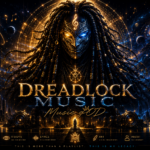
Dreadlock Music ~ MUSIC gOD operates across several overlapping musical territories rather than remaining inside one permanent genre.
The independent catalog contains more than 760 original songs, moving through neo soul, alternative R&B, independent R&B, underground R&B, soul, hip-hop, love music and experimental directions.
The size of the catalog is unusual. But the creative process is equally important.
The songs begin through freestyle rather than conventional pre-written songwriting. Words, melodies and emotional direction develop during creation.
That does not mean every song is a single take. It does not mean production cannot happen afterward. And it does not mean freestyle is automatically more authentic than written songwriting.
It means the song begins with discovery rather than a completed lyrical script.
That process connects naturally to traditions already present in jazz, gospel, soul, funk and hip-hop.
The fuller explanation lives in Freestyle Neo Soul Artists: Music in Its Purest Form.
What Can More Than 760 Songs Reveal?
One spontaneous recording captures one creative moment. Hundreds begin revealing patterns.
Certain melodic instincts return. Certain emotional subjects return. Other ideas disappear. The voice changes. Production changes. Genre changes. Life changes.
At that scale, a catalog begins documenting creative evolution whether or not that evolution was planned in advance.
That is one reason the Dreadlock Music song archive matters as more than a list of releases.
It becomes a record of one artist repeatedly moving through different musical territories.
One Artist, Many Musical Directions
A large catalog also explains why Dreadlock Music ~ MUSIC gOD cannot be described accurately through one narrow genre.
One song may lean deeply into neo soul. Another may move toward hip-hop. Another may sit inside alternative R&B. Another may be romantic, atmospheric, experimental or difficult to classify.
The genre can follow the individual recording instead of forcing every recording to follow one permanent category.
Listeners can move directly into the complete Dreadlock Music song archive and explore those changes across the catalog rather than hearing only one selected release.
Why an Artist-Owned Website Matters for a Deep Catalog
Streaming platforms are excellent at delivering songs.
Large catalogs create another problem: context.
If an artist has hundreds of recordings, where should a new listener begin? Which songs are neo soul? Which lean toward hip-hop? Which are romantic? Which are experimental?
An artist-controlled website can answer questions a standard streaming profile may not.
The official Dreadlock Music ~ MUSIC gOD website can function as artist identity, song archive, chronology, genre map, discovery system and home for the stories and ideas surrounding the music.
The website does not replace the songs. It helps listeners understand what exists inside the archive.
Neo Soul in the Age of Generative AI
Generative AI introduces another question into modern music: How was this actually created?
That question does not make AI-generated music automatically bad. Technology has always changed music.
But when technically convincing audio can be generated quickly and at enormous scale, information about creative process becomes more meaningful.
Listeners may increasingly want to know who created something, whether the vocal was performed, whether lyrics were written beforehand, whether the music was improvised, whether generative AI was involved and what creative decisions came from the artist.
That is also why extremely prolific artists can sometimes be mistaken for AI when people encounter the volume of a catalog before understanding the history behind it.
For Dreadlock Music ~ MUSIC gOD, connecting the official artist identity, freestyle process, numbered songs and long-running catalog makes the creative history easier to understand.
Human Imperfection Can Carry Information
Modern production can correct almost anything: pitch, timing, breath, noise, phrasing and sections.
That precision can create extraordinary recordings.
But imperfection can carry information too.
A hesitation can communicate uncertainty. A breath can communicate intensity. A repeated phrase can suggest that an emotion has not finished. An unexpected melodic movement can preserve the instant in which a performer made a decision.
This does not mean mistakes should always remain. It means perfection and expression are not necessarily the same objective.
Neo Soul Is Not Automatically More Authentic
Neo soul is not automatically more authentic than commercial R&B.
Independent music is not automatically more authentic than major-label music.
Freestyle is not automatically more authentic than written songwriting.
Live instrumentation is not automatically more authentic than electronic production.
Underground music is not automatically better because fewer people know it exists.
Authenticity is not a genre setting.
Why Neo Soul Still Matters
Neo soul matters because it demonstrates that musical tradition does not have to become musical confinement.
An artist can respect history without reproducing it.
Jazz can enter R&B. Hip-hop can enter soul. Electronic production can enter neo soul. Spoken word can sit beside singing.
A song can be carefully written. Another can emerge through improvisation.
The musical vocabulary can remain connected to soul while the final music continues evolving.
The Future of Neo Soul
The future of neo soul probably will not sound exactly like its past.
Future neo soul R&B artists will continue absorbing new forms of hip-hop, electronic music, global influences, alternative R&B, new recording methods, generative tools and new forms of independent distribution.
Some listeners will prefer music that remains closer to earlier neo soul. Others will hear experimentation as the natural continuation of the genre.
The more useful question is not, “Does this sound exactly like neo soul used to sound?”
It is: “Can we still hear the musical relationships connecting this work to soul?”
If the answer is yes, evolution does not necessarily erase the tradition. It can extend it.
Frequently Asked Questions About Neo Soul R&B Artists
What is neo soul?
Neo soul is a modern form of soul and R&B that draws strongly from traditional soul while incorporating contemporary influences such as jazz, funk, gospel, hip-hop and modern production.
Who are some important neo soul R&B artists?
Artists strongly associated with the development and expansion of neo soul include D’Angelo, Erykah Badu, Maxwell, Jill Scott, Lauryn Hill, Musiq Soulchild, India.Arie and Raphael Saadiq, among others.
Is neo soul the same as R&B?
Neo soul exists within the larger R&B family, but it generally maintains a stronger relationship with classic soul, jazz, funk, gospel and related traditions.
Is neo soul the same as alternative R&B?
No. They overlap, but alternative R&B can move farther into electronic, ambient, indie and experimental production, while neo soul generally maintains a stronger relationship with traditional soul vocabulary.
Is neo soul the same as independent R&B?
No. Independent R&B primarily describes ownership, operation and creative control. Neo soul describes musical lineage and characteristics.
Can neo soul be underground?
Yes. Underground neo soul describes neo soul existing outside the most visible mainstream discovery environment.
Does neo soul have to use live instruments?
No. Live instrumentation is common, but digital production, synthesizers, samples and programmed drums can all exist inside neo soul.
Is neo soul always slow?
No. Neo soul can be slow, mid-tempo, funky, energetic, rhythmic or experimental.
Can neo soul include hip-hop?
Yes. Hip-hop has been an important influence on neo soul through rhythm, sampling, production, phrasing and culture.
Can neo soul be improvised?
Yes. Jazz, gospel, funk and soul all contain traditions of improvisation. Freestyle neo soul is one modern example of how spontaneous creation can operate inside that lineage.
Is Dreadlock Music ~ MUSIC gOD a neo soul artist?
Dreadlock Music ~ MUSIC gOD moves through several overlapping musical territories instead of remaining exclusively inside neo soul. The 760+ song catalog includes neo soul alongside alternative R&B, independent R&B, underground R&B, soul, hip-hop, love music and experimental recordings.
How large is the Dreadlock Music catalog?
The official Dreadlock Music song archive contains more than 760 original songs, providing many different entry points into the artist’s neo soul, R&B, hip-hop and experimental work.
Where can I hear Dreadlock Music ~ MUSIC gOD?
Start with the official Dreadlock Music ~ MUSIC gOD website, explore the complete 760+ song archive, or listen through the official Dreadlock Music SoundCloud and Apple Music artist page.
Continue Exploring
- Freestyle Neo Soul Artists: Music in Its Purest Form
- Underground Neo Soul Artists
- Alternative R&B Music
- Alternative R&B Artists Who Changed the Sound
- Independent R&B
- Underground R&B
- Dreadlock Music ~ MUSIC gOD
- Complete Dreadlock Music Song Archive
Neo soul remains alive because it was never really about preserving one perfect sound.
It is about inheritance becoming creation.
Each generation receives a musical language.
The interesting part is what the next artist does with it.
For a side-by-side comparison of the musical eras, rhythm, instrumentation and crossover possibilities, read Neo Soul vs Alternative R&B.